…and a quick word about teaching

20160422_170052

When we checked into our hotel in Luang Namtha, Laos, the young man at the front desk asked where we were from. “U.S.,” we replied. “Hawaii.” He didn’t seem to know where Hawaii was, but when we mentioned we were from the U.S. his face lit up. He asked if we had plans in the evening, and if not, would we would mind coming to his class to teach English? We shrugged and said sure, why not, and finished checking in. Later, Ted went back and asked him later if it was okay with the teacher. We weren’t sure what we had just agreed to, after all. He replied that the teacher had asked the class to bring in native English speakers so they could hear the correct pronunciation. He said we could just come and “talk about our experiences.” Little did we know we would be teaching the entire class.

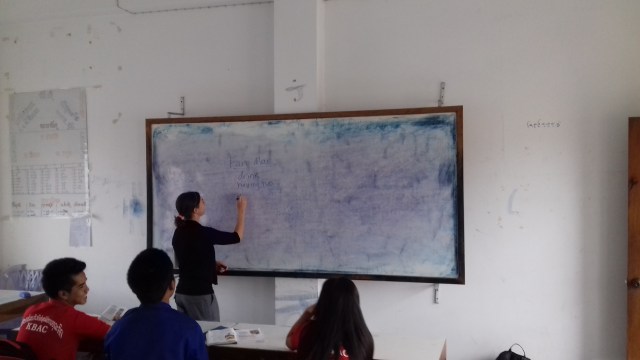
When we arrived at the school at the mentioned time, no one was there. Little by little students began to trickle in, and about 20 minutes later our friend from the front desk showed up. Still no teacher, so the students asked if we could teach for a bit. So, completely unprepared, we began the class. They had a textbook, but it was poorly laid out, inappropriate for their level of comprehension, outdate, oh- and in Vietnamese! But we made it work. A bit later the teacher showed up, and at first I was relieved, thinking he would take over. But instead he just took a seat and waved us to keep going. “Teach the whole hour,” was his only response. So we did.

At the end of the hour, I felt like I was running out of ideas and the attention of the kids (late teens to early 20’s) was waning. I called for a break. The teacher had walked out of the class a few minutes prior, so we didn’t get to speak with him. The kids, however, were all very appreciative, and gave us directions to the town Wat (temple) that we had wanted to walk to for sunset.

I felt humbled. These kids had a teacher that showed up late, a terrible textbook not even in their language, and yet they pressed on, and spoke remarkably well. And here was I, not even a professor, just some traveler who happened to be a native English speaker; and yet this thing trivial thing to me was something of great value to these kids. And not just these kids, but people everywhere are wanting to learn English. It is becoming the international language. And the more people can communicate with each other, the more we can understand and have compassion for each other. I think I will do this again.

Good Bye Laos!

download

Our last stop in Laos was the town of Luang Namtha, about a 9 hour sleeper bus ride from Luang Prabang.  At 2:30am, we were dropped off 9 miles outside of town on a very quiet road. Only 5 passengers in total (including us) got off at this stop as the rest of the bus was heading to other areas in Northern Laos. Fortunately, after only 10 minutes of waiting on the side of the road, a songthaew driver (a converted passenger pick-up truck) happended to pass by and took us the rest of the way to Luang Namtha, and to a hotel with a 24 hour Front Desk.

After a great night of sleep, we visited the Front Desk the next morning to get some information about Luang Namtha. The very friendly and outgoing employee at the desk, Phonekeo, explained he was attending a business college just the down the road, and was excited about pursuing a career in Finance.  He was also not shy about urging us to teach at his class later that night.


After finishing our time in the classroom, we took a sunset stroll to nearby Wat Samakyxay, a Buddhist temple located at the top of a hill overlooking Luang Namtha. We enjoyed some great views of the town, and got caught in a heavy thunderstorm that really came out of nowhere (we took refuge under an awning outside of the monks’ sleeping quarters). We finished the night with a trip to the Night Market, and a dinner of fried rice and deep fried frog.


Chomphet and The Hill the Monks Built

Directly across the Mekong River from the city of Luang Prabang (Laos) is Chomphet. We heard Chomphet is Luang Prabang’s quiet and very rustic neighbor, so we walked down to the riverfront to see about catching a boat across the river. We found a group of Laotians waiting near a boat, so we waited with them, and waited somemore. Finally, a curious Laotian approached us and asked what we were waiting for?  When we replied “a boat,” he explained the boat landing was another a few minutes down the river (still have no idea what everyone was waiting for). We thanked him, found the correct boat landing within a few minutes, and paid 10,000 kip a piece ($1.20) for the short ride to Chomphet.

Once we got to Chomphet, the rumors we had heard were immediately confirmed. Busy paved streets were replaced with brick and dirt roads that were literally wide enough for just one car. There were no hotels or travel agencies, just a very small village and lots of peace and quiet.

After a short 10 minute walk the small village was behind us, and the landscape gave way to lots of trees and one dirt path that lead into the countryside. The temperature was well over 100 degrees, so after another mile, we ducked into an abdanoned thatched hut for some much needed shade. We split a sweet potato and water, and enjoyed some great views of the Mekong and surrounding jungle.

As we continued along the lone dirt path into the countryside, we passed three wats or temples, all of which are home to Laotians monks. All Lao boys betwen the age of 12 and 20 are expected to temporarily become a novice monk for a period of at least three months. Unlike a monk, novice monks only take 10 vows, instead of 200 + (but they still shave their heads, dawn an orange robe, and move away from their familes and into a monastery).  It kind of sounds like the social equivalent of going away to college in the US, as the boys find independence away from home, bond with others their same age, and take the opportunity to explore what they might want to do with their lives.

Following a map on our phones, we branched off to a smaller and more overgrown trail that lead through the Wat Had Siaw. We knew we were on the right path because it began right next to the long rectangular Standing Meditation Corridor building as referenced on the map. We also saw some small yellow concrete cones further up the path that were mentioned on the map (a good sign we were on the right track).

Most of the monks’ daily routine consist of prayer, meditation, and improving their wat through renovations and art additions. On the hillside overlooking Wat Had Siaw, we came to several religious sculptures that had been crafted by the monks, including stone and gold colored depictions of Buddha, and an inscription that read “Not to do any evil, to cultivate good, and to purify one’s mind – advice from the Buddha.” After spending some quiet time on this unique hillside (not another tourist or Laotian around), we headed back to Luang Prabang for the modern comforts of air conditioning and sushi.


Kuang Si Waterfall

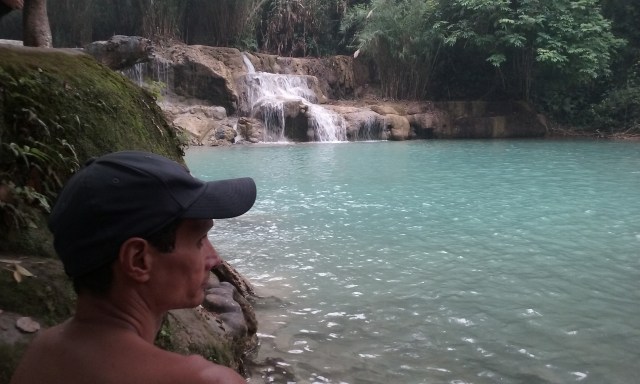
Standing in awe of something is a way of temporarily losing one’s ego. At Kuang Si waterfall today I saw this expression on the faces of others and felt it myself. Living in Maui, I’ve seen some beautiful waterfalls, and Kuang Si was beautiful as well but totally different. The rock formations are much different, and have a rounded look, as if the centuries of pounding water have worn away all the edges. The consistent flow has turned the limestone into perfect pools, and many of them, all a beautiful turquoise blue. And cold!

And then there’s the vibe of this place. After walking the trail that goes up and around the waterfall and constantly hearing the flow of water everywhere, I felt like a zen monk doing a walking meditation. Maybe it was walking barefoot, and really connecting with the land and the energy of the place. Or maybe that’s just the effect that a beautiful place can have on a person.

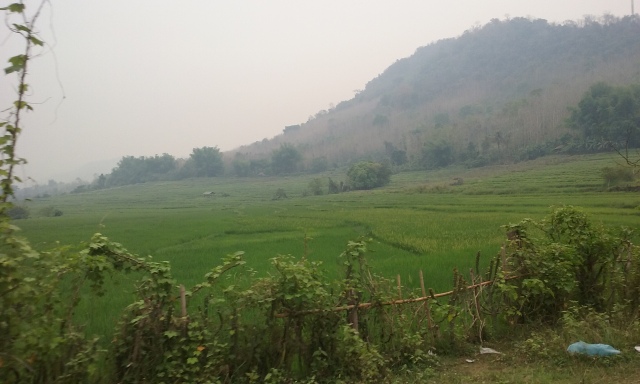
We had left Luang Prabang after renting a scooter, and made the half hour drive south past rural villages and rice paddies. After entering the park, we walked past the bear rescue center and to the first pool. It was already better than any place we’d seen on our travels.

20160418_115323

20160418_125359

As we continued hiking, each set of pools was seemed even more beautiful than the last, and the waterfall at the top was truly awe inspiring. From there, we took a hike up and around the falls, with some great views and more pools at the top. It was funny, the pictures looked so perfect it almost looked more like a painting.

And what better way to end the day than a $2 buffet at the night market! 🙂

Happy Laos New Year from Vang Vieng

So it’s been a while since our last post, so I’ll give a little update. We crammed ourselves into a minibus with some other travelers and headed for the Cambodian-Thai border, our destination being Bangkok. It was a long day of shuffling through lines at the border and then waiting for everyone else on our bus… anyway, we reached Bangkok alive and well and in fairly good spirits. We were in Bangkok mainly because from there we could book an overnight bus to Laos, so we were there only about 24 hours. The night bus was not bad, not great. Vientiane, when we arrived was a soul sucking 104 degrees, but luckily I had arranged a hostel about a minute from the bus station with air conditioning. Vientiane was another short stop for us; only one night and then hopped the five hour bus to Vang Vieng, where we planned to spend four nights and also the Lao New Year.

The town of Vang Vieng is quite beautiful, surrounded by giant karst formations that seem to defy gravity. Once the mecca of debauchery, VV has now mellowed out a bit. After having 27 deaths in 2012, the police cracked down on the drug and drinking scene, so now travelers come to hike, bike around, tube the river, and generally be lazy and enjoy life.

We followed suit and biked to some caves, went tubing, and walked around town getting soaked. Lao New Year, or Pimai, is celebrated by throwing water on one another for long life, peace, happiness and such (I’m guessing). The locals also flock to the river where they hang out and even pull tables and chairs into the river to eat and drink and play very, very loud music. What this all turns into, of course, is a town wide water fight; in hundred plus degree weather, the timing really couldn’t be better.

Cambodia and the Temples of Angkor

Following a combined 10 hour bus ride from Ho Chi Minh City (and an overnight stay in Cambodia’s capital, Phnom Penh), we arrived in Siem Riep, Cambodia (or Kampuchea, as its called by its residents and much of the world). With the exception of the nightlife and Night Market located at busy Pub Street, Siem Reap is a pretty low key city (just our speed). Siem Reap, however, is also home to the amazing temples of Angkor. Prior to the Industrial Revolution, Angkor was the capital of the Khmer Kingdom and the largest city in the world! It had canals and roadways that stretched more than a 1,000 kilometers from the city center (the second largest city at the time only spanned about 100 kilometers).  At its peak around 1100 AD, the population of Angkor was estimated to be around one million (while London, in comparison, was only 50,000).  At the center of Angkor were over a thousand temples, including Angkor Wat (its iconic five peaks are on the Cambodian national flag today) and Angkor Thom (with dozens of faces etched into its many walls).  We spent a day riding bicycles between these amazing temples, followed by a a dip in our hotel pool (the temp that day was about 103 and very humid) and finally a much needed couples massage. Thank you Renata, and the ancient city of Angkor (and the outgoing Angkor monkeys), for making my 43rd birthday quite possibly the most memorable ever!

Next stop Laos.

Heavenly Hoi An


Our last stop in Vietnam is the charming city of Hoi An. Hoi An is located almost in the exact geographic center of Vietnam (going from south to north), and is a welcome break from the always busy streets of Ho Chi Minh City (formerly Saigon). The people of Hoi An are welcoming and friendly, and its probably hard not to be when your backyard is miles of lush green rice fields. In terms of landscape, Hoi An has it all: a river, beaches, and the Marble Mountains (five 1500 foot mountain peaks with some steep hikes into eerie “hellish” caves and old Buddhist shrines, as well as some incredible views from the peaks). The signature dish in Hoi An is cao lau (a heaping $2 bowl of dark pork broth, yellow noodles, and locally grown veggies), and it pairs well with fresh homemade beer, or bia hoi (which will put a mere 20 cent dent in your wallet). Hoi An also has enough stylish (and over-the-top) suits and dresses to make a Parisian seamstress envious.  Most clothing is custom fit by a skilled tailor right at the store. This allowed Renata to use her ever increasing Vietnamese vocabularly to negotiate custom clothing prices and exchange pleasantries with shop owners ( I, on the otherhand, have only recently learned to say “thank you,” as most of my focus has been on locating and consuming bia hoi).

Although we’ve experienced some great places in Vietnam, the beautiful landscapes and charm of Hoi An probably puts it at or near the top of our list.
Cam On (that means “thank you”)

Grab a Napkin

… because you are about to drool. I just wanted to take a moment and pay my respects to some of the awesome food we’ve had here. Enjoy.

10 Tips for Vietnam

So if any of you out there want to travel to Vietnam someday (and I highly recommend that you do!), here are a few tips.

1. If you have some time to kill in a big city, check out some of the public parks. They are great places to people watch, and usually have some snacks or coffee and tea. If you are lucky, they also sometimes have little workout machines that are pretty fun. This morning I saw one guy doing some martial arts with two sticks (escrima?), two guys doing some other kind of martial arts, three guys practicing bar tricks with a shaker and bottle of vodka, and a man and woman practicing ball room dancing. The parks are also usually well maintained and lovely and peaceful breaks from the chaos of traffic and vendors trying to sell you anything and everything.

2. If you rent a moped, figure out the amount of gas your tank holds (in liters) and how much it should cost. And give the gas attendant ONLY that much money. This greatly diminishes your chance of being ripped off. Apparently it’s pretty common, even among locals.

3. ALWAYS look at the prices on a menu before you sit down. You can pay 20-35k ($1-2) for a great bowl of pho, or you can pay 60-80k ($3-4) for a great bowl of pho. Up to you.

4. When going to a restaurant, don’t expect the server to greet you, hand you menus, ask if you want to start with a drink or appetizer, and then return and check on you every 5-15 minutes. If you get the first two things, you’re in luck. Alternatively, sometimes they hand you menus and then stand there awkwardly until you order. That works too. Also, don’t expect all the food to come at the same time, or even the apps before the main course. The basic gist is, when it’s ready, they’ll bring it out. When you’re done, ask for the check. Tipping is not expected, but you can if it was great service and food.

5. Also, if you ask for water at a restaurant, they will usually bring a bottle of water for a dollar or two, so I just started bringing my own water bottle. The water here is okay to drink- I try to boil it first just for good measure, or use Ted’s sterilizer pen (very handy). They usually serve complimentary green tea with meals, which is nice. It’s also a good idea to bring a handkerchief or tissue with you, as some places will not provide napkins except packaged towelettes, which they (of course) charge you for.

6. It seems that toilet paper is seen as a luxury, not a necessity, which is another good reason to carry tissue.

7. If you go to a market, try not to buy from the first vendor you see. Chances are it’s also the most expensive one, and there are tons of other vendors selling the exact same thing for the same price or cheaper.

8. If you like massage, look for places that do blind massage. They are usually cheaper and often better.

9. Vegetarian restaurants are also usually cheaper and often better.

10. Oh- and if you see a food court, make your way there, post haste. Run, in fact. Asian food courts might be one of the best things that’s ever happened to me.

Well, that about sums it up for now- just a few observations from a wandering nomad.

Dalat Madness

At day 3 in Dalat, I admit the city is growing on me. Coming to Dalat, Ted and I had envisioned a peaceful mountain town with lots of outdoorsy stuff to do. Wrong! Picture a city with streets like a labyrinth filled with roundabouts and a bunch of horn happy mopeds. It was hard to find anything and hard not to feel in the way no matter where we stood, parked, or stopped. But after a few days (and thanks to google earth) we managed to navigate our way around and (thankfully) out of the city, which made it worth it.
Today we splurged on a mountain bike trip with Viet Challenge Tours and had a great time and some much appreciated peace and quiet outside the city. Our guide, “Smoker,” took Ted and I plus a British dude on some little dirt roads and the occasional single track through the pine tree forest that surrounds Dalat. He was very informative about local legends and history (between cigarettes) and we had a great time, stopping at some random animal sculptures, a flower garden, and a coffee and tea shop where we had the pleasure of trying the famous weasel coffee, which is basically coffee made from weasel turds. Seriously.
Tomorrow we head back for Mui Ne, and I will be stoked to be back in a smaller town with more of a mellow vibe. My advice for anyone thinking about going to Dalat would be: DON’T go on a weekend; make sure you have google earth (or a local friend), and get out of the city. It is a beautiful area, you just have to make an effort to see it.