Two days in Paris

20160920_193329

Since we are flying standby and Paris had the most open seats in business class, we felt it would be prudent to visit Paris for a few days at the end of our Europe trip. Most hotels (or even hostels) are wicked pricey, so expect to shell out some bucks for staying in the city proper. We stayed at the Hotel Europe which was on the edge of the Latin Quarter, a very lively neighborhood. It was about $100 a night and had just enough room for a bed, our luggage and us, which was fine since we spent most of the day just walking around anyway. We were in walking distance (5-10 min) of Notre Dame and the Louvre, which are spectacular buildings to sightsee. The line to get into Notre Dame was about a block long so we decided to skip that.

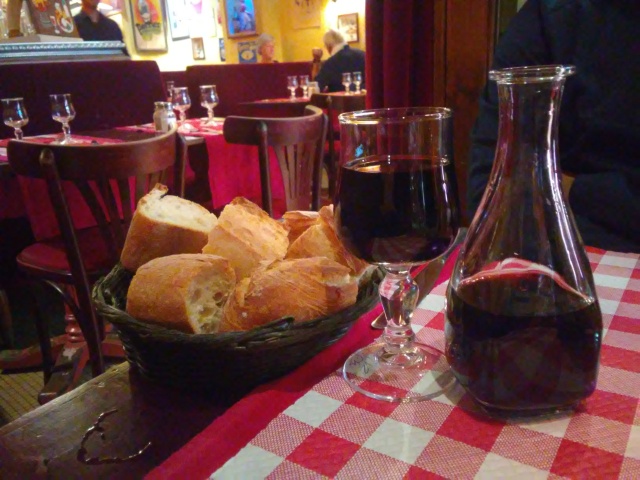
In Paris, it is difficult NOT to eat extremely well. Every restaurant seemed to have specials including escargot and fois gras. So for two days this is mainly what we did… wander around, take pictures, eat and drink. Not a bad way to spend a few days.


Erin Go Bragh!

download

Ireland, I miss you already! Somehow in the short time we were there, Ireland has found itself a permanent place in my heart. Ireland has such a colorful history it would be difficult to sum it up in one short blog post. To give an idea of just how old the culture is, there is evidence that Druids inhabited the island since around 3000 B.C. The Druids worshipped the sun, and one can still find circles of stone, similar to Stonehenge but on a smaller scale. There is also a place called Newgrange where on the winter solstice, a shaft of sunlight illuminates a small tunnel built by these druids. Around 500 B.C., the Celts came to Ireland, and conquered the island quite easily, since the population of the Druids was comparatively small, and the Celts also had iron to their advantage. The Celts originated in central Europe and spread outward, especially into the northwestern regions of Ireland and Scotland. The Celts were a culture, not an empire and so when the Romans began their conquest of Europe, many areas that were dominated by Celtic peoples such as Gaul (France) and Iberia (Spain and Portugal) became part of the Roman Empire. The rest of the Celtic population fled westward, toward Scotland, Britain, and Ireland. The Roman empire eventually reached as far as Britain, but they decided not to attack Ireland because it wasn’t worth the effort. This is why the Irish and Scottish languages remained Celtic and did not evolve into a Romance language like Spanish, French, German or Portuguese.

But on to more present times… we arrived in Dublin, and after renting a car we headed west. This was a bit of a challenge, since it was a manual drive and everything was on the left side. Add to that tiny roads with no shoulder and roundabouts everywhere and you get a very nervous Renata. Somehow with only one minor curb incident we made it to Tullamore, a small town about halfway across Ireland, where we spent the night. In the surrounding area lies Kinnity Castle, which was originally built in the 1200’s. We took a very green and damp hike to Kinnity Castle, where we stopped by for a Guinness and a cup of tea. It was quite an experience! The castle had been refurbished and made into a hotel, keeping all antique furniture, and even a red carpet inside the entrance to really make you feel royal. There were very posh seating and dining rooms, as well as a small bar in the old library. Ted (of course) requested a Guinness and I had a lovely cup of tea, and we enjoyed feeling fancy, surrounded by very tall windows and very old books.

The next day we headed to Galway, where we met up with Father Deacy, who has been a friend of Ted’s family for many years. His home is the St. Augustine Cathedral which is a surprising haven of peace and quiet in the center of the bustling downtown of Galway. Father Deacy took us on a walking tour of Galway, telling us stories of Ireland’s past as he pointed out buildings that used to be castles and various other historical objects. Galway was known as the “city of tribes” because there were so many different tribes in the area. Which is why there were so many castles, since they were always attacking each other. Nowadays, the castles have been repurposed as banks, coffee shops, or other businesses. For example, the Lynch Castle is downtown (now it’s a bank), and so he told us the story of Lynch and why we use the term “lynch mob” and what it means to “lynch” someone. Many years ago, a young man with the last name of Lynch raped a young girl who was visiting from Spain. Details are unclear and the story varies depending on who’s telling it, but he may have killed her or another guy as well. It just so happened that his father was the town judge. Everyone was afraid what Judge Lynch might do and no one wanted to have a trial, and in the end the judge just took his son and hung him himself. So from then on to hang someone without a trial was to “lynch” them.

Father Deacy was an endless source of local history, and we are grateful to have been able to spend two days with him in Galway. Galway itself is a University town with a lot of personality. The streets are filled with “buskers” (street performers) and music from the pubs spills out into the street along with swarms of people, both tourists and locals. As one person we met said, “There’s always something going on in Galway.”

After Galway, we headed south towards the Cliffs of Moher, which was an absolute spectacular work of art from Mother Nature. The Cliffs are the tallest on the European continent. Words don’t do it much justice so I’ll just show the pictures here-

From there we continued on to Lisdoonvarna, where they were hosting the annual Matchmaking celebration. In the past, farmers in the area would spend most of their time in the fields and not have much time for dating, which is why they decided to have a festival. Years later it is just as popular, and that night we saw many an inebriated individual singing loudly along with the local band. We spent the night in Ennis, the closest larger town (since it’s impossible to get a room anywhere Lisdoonvarna during the festival). So we booked an Airbnb bedroom and met a very nice couple who recommended a hike in The Burren, which we did the following day.

The Burren is a stark, treeless landscape made up of limestone which has been sculpted into clints and grykes. Yes, those are real words. Limestone is compacted sediment that actually dissolves under slightly acidic conditions, so when rain pools on the rock, it wears it down into lines and holes (grykes) and the remaining chunks (clints) stick up all over the landscape. We enjoyed our walk in the mystical Burren before heading back towards Dublin for our final day in Ireland (sigh). Ted said it looked like the moon, except with grass.

Our final day in Dublin was mostly spent walking around (and yes, buying a few souvenirs) and also visiting the University to see the Book of Kells. This is still one of the oldest books that exists today, compiled around 800-900 A.D. The artwork in it is amazing and must have been very time consuming. It loosely parallels the bible. Though we were not allowed to take photos, I did download some for your viewing pleasure.

Ireland was a blast and we had the opportunity to meet and stay with some wonderful people. Go raibh maith agat (thank you) to Ireland and her people!
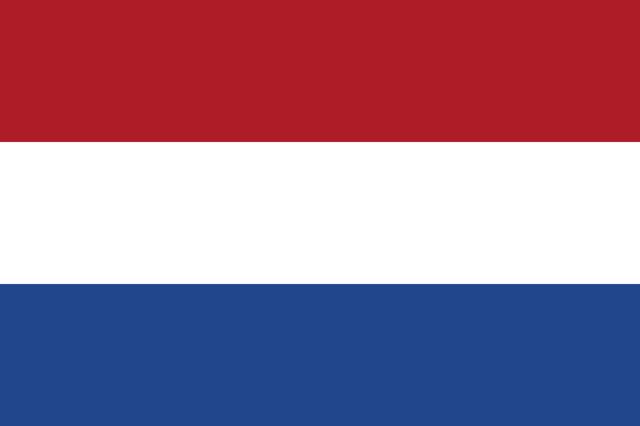
Next Stop, The Nederlands

flag_of_the_netherlands-svg

From Brussels, we hopped on a train and headed north to The Netherlands. As we traveled through the Dutch countryside, it seemed like every inch of unoccupied land was used for agriculture or livestock. Although The Netherlands is only the size of Tennesee, it the world’s second largest exporter of agricultural products, and surprisingly the world’s #1 exporter of tomatoes (second only to Mexico).

8 train & bus transfers and 7 hours later, we arrived in the Dutch suburb of Haarlem. We rented bicyles, rode to the beach, and took a dip in the warm 70 degree ocean. At sunset, we pedaled to an outdoor cafe in the center of Haarlem, and enjoyed a great dinner while soaking in the views of Grote Kerk Cathedral. Built in 1479, it housed the biggest organ in the world for many years, and also hosted several legendary composers including Handel and 10 year old Mozart.

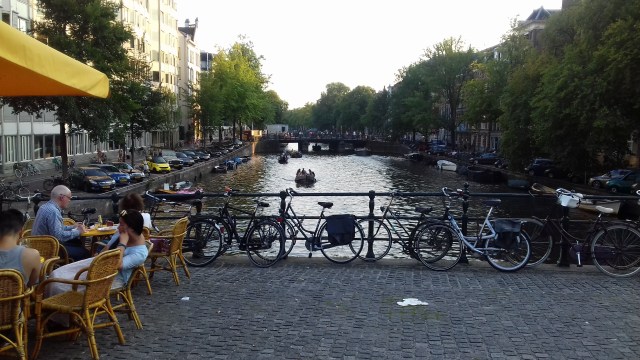
The following day we took a short train ride to Amsterdam, and found a hotel in the heart of this busy tourist destination. Despite the crowds of people and countless restaurants and souvenier shops, Amsterdam still retained a quaint, laid back feel. Like most of The Netherlands, the primary mode of transportation were bicyles, and every sidewalk in the city was divided into pedestrian and bicycle lanes (The Netherlands is truly a biker’s paradise).

We began our visit to Amsterdam by lounging and people watching from one of Amsterdam’s many coffee house cafes, and eventually found our way to Madame Trussaud’s Wax Museum. The interactive theme of this museum made it really fun, and Ted “jammed” with Bob Marley while Renata coached Anne Frank on her diary and stole a bottle of champagne from an unsuspecting super model.

After leaving the wax museum we snapped some photos at Dam Square (the gathering and social mecca in the city center), followed by a leisurely stroll along one of Amsterdam’s many canals on the way to the Anne Frank House (no photography allowed inside the house, so you won’t see any posted here). The Dutch are amazing engineers, and nearly one-fifth of The Netherlands’ total land mass was reclaimed from the ocean by way of these canals. The setting sun reflecting off the still water of the canals also made for the perfect end to a perfect Dutch day.

Dank Je Nederlands (Thank You)!

20160913_184922


Tres Bien Belgium!

download

Our first stop on our Mini European Vacation was to Brussels, Belgium. Belgium specializes in beer, chocolate, waffles, and frites (french fries), making it an absolute paradise for Ted. Belgians are the biggest consumers of french fries in Europe, and most stores sell at least 2 or 3 dozen brands of Belgian brewed beers. We skimmed through a Beers of Belgium book that was about 300 pages long!

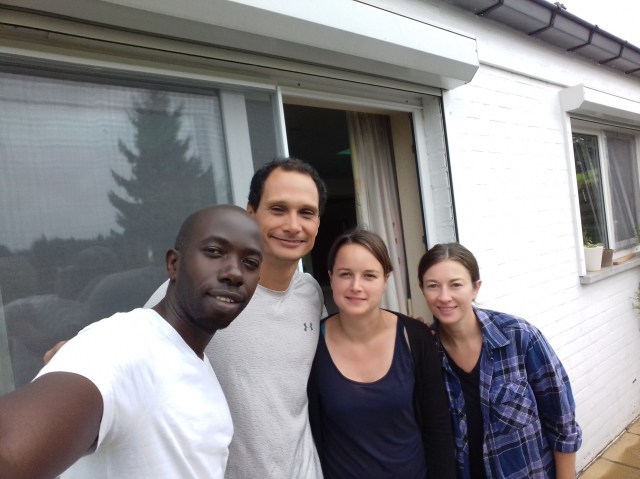
Thanks to AirBNB and lots of research by Nada, we rented a bedroom in a house owned by a friendly young couple living just outside the city. She (Matilda) was from Belgium and he (Elie) was from Rwanda, and just like most people living in Belgium, they both spoke at least three languages. They generously provided with us maps of the area, bus/train cards, and lots of great information. Another great thing about having local hosts is they provide a personal look into the culture. For example, most Belgians seldom trouble themselves with politics, or as Elie explained, everything else is a distant second to family.

20160911_124132

During our first day we strolled through the Grand Place, a 1,000 year old outdoor square in the City Centre lined with sidewalk cafes, breweries, and in the evenings, live entertainment. After lunch we toured the Museum of Musical Instruments. The unique thing about this museum is it houses instruments from around the world, and visitors can hear each instrument being played thanks to a trusty hand held device.
Many instruments on display, such as the hurdy gurdy, were totally new to both of us.


Our second day began with a stop at the Atomium, a futuristic looking Belgian landmark consisting of nine stainless steel spheres. Each ball has a viewing area, and the balls are connected by escalators and stairwells. The Atomium was built for the 1958 World Fair.

Next door to the Atomium is Mini Europe, which has miniature replicas of national landmarks belonging to every country in the European Union. Each exhibit included the country’s national anthem, and in some cases miniature protestors (depending on current events). The only downside to Mini Europe was its BIG entrance fee (still worth every Euro though).

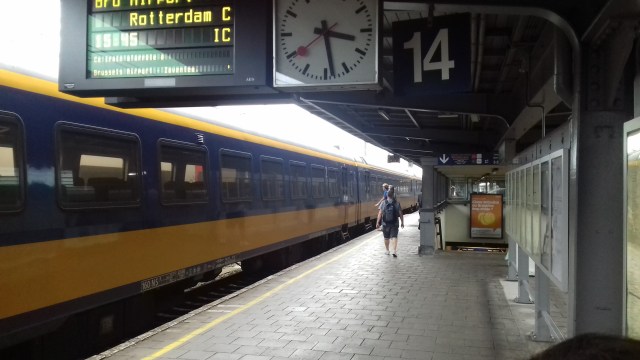
After three days in Brussels, we took a train to Amsterdam in The Netherlands (and it’s from that very train we are writing this post). More to come from The Netherlands. Slaap well (“sleep well” in Dutch).

20160911_152837


Road trip part 2: Oregon loop

In between the two road trips we had some lovely family time in Spokane as well as Pt. Roberts, which is a tiny piece of U.S. territory accessible only through Canada (or by boat). And by had a lovely time I mainly mean eating and drinking… tons of fresh fruit and produce in Spokane and fresh dungeness crab in Pt. Roberts. Ah, the gastronomical joys of vacation!

With a week to kill before my sister and her husband arrived, we decided to take another road trip. Ted wanted to go to Astoria, Oregon, even though I assured him that Oregon was basically a flatter, more boring Washington. So we drove south and ended up an hour south of Astoria in Saddle Mountain State Park, since all the coastal campgrounds were full. The campground was in the midst of endless trees, which was beautiful. Even better, there was a 2 mile hike up to Saddle Mountain right outside of our tent! All we had to do was start walking. So after a very steep 2 miles we were rewarded with some amazing panoramic views of Oregon. Not so bad after all.

The next day we packed up and drove back to Astoria, where we walked around and even visited the movie museum, which of course had props from Goonies and we could even make a short film ourselves.

After Astoria, we continued on to Rainbow Falls State park (which was a bit of an exaggeration) in Chehalis, Wa. The “falls” was more like a 6 foot rapid in the middle of a river. Oh, well. Chehalis did have a garlic festival going on, which is why we were really there. So the next day we enjoyed a myriad of garlic themed food and even had a garlic cupcake, which was surprisingly delicious.

Next on our tour of southern Washington was Rainier National Park, where we stayed at Indian creek campground. It was beautiful and quiet, accompanied by a large lake and some strange, UFO-like cloud formations.

The next day we decided to hike into the goat rocks wilderness, which was one of my favorite hikes so far. It was a long hike, being about eleven miles round trip. We hiked up a ridge and then crossed over and down into Shoe lake. At the top of the ridge we had an amazing 360 view of the mountains, including Rainier and Adams. Shoe lake was yet another gorgeous alpine lake and we enjoyed a bracing (and brief) dip in the glacial water.

Since we still had a few days left, we decided to revisit the Leavenworth area, since we liked it so much. We stayed in the Icicle creek canyon again, though this time at Johnny Creek campground, a little farther up the canyon. For our hike we chose Stuart Lake, which starts out on the same route as Colchuck, the hike we had done previously in Leavenworth. The path for Stuart lake splits off from the path to Colchuck and meanders around a slightly lower elevation with some great views of craggy peaks surrounding the lake. We didn’t jump into Stuart but instead continued on to a field behind the lake, where we could look up and see the glacier and the pass over to Ingalls lake.

Feeling grungy and tired but happy, we spent the last night at our camp with some friends, and then headed back to Home.

Road Trip Part 1: The Cascades

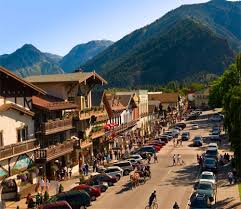
After getting back from our jaunt to Spokane with my parents, Ted and I decided to take a quick road trip over to Leavenworth and Cashmere (where I’m from) to see the area and so Ted could see my wee little hometown. We opted for camping up the Icicle Canyon, which is a winding little road at the end of Leavenworth. Leavenworth itself is a Bavarian styled town of about 2,000 people. It was a struggling logging community until the 60’s when a couple of entrepreneurs thought that by modeling the town after a Bavarian village, it would boost the town’s economy. And they were right! Now everything is “ye olde this” and “Das brewery” etc.

2016-09-06-10-03-25-1025875155

We set up camp at Bridge Creek Campground, about 15 minutes outside of town. After consulting our local hiking gurus, my aunt and uncle, Dawn and Karl, we decided to hike to Colchuck Lake. Colchuck was about 9 miles roundtrip and like most, if not all alpine lakes, absolutely gorgeous.

That night, we ate dinner with Karl and Dawn at their house (Thank you!!!) and got another recommendation for a short hike for the next day on our way back, Minotaur Lake. So the next day after a short tour of Cashmere (about 10 minutes is all it took) we drove towards Plain on the back roads headed for Minotaur. Minotaur was a very steep hike; only about 4 miles round trip but felt like a lot more with an 1800 foot elevation gain. We were again rewarded with pristine alpine meadows, sparse rocky peaks and a small idyllic lake.

We continued on the back roads and came out near Stevens pass. Definitely not the fastest route, but certainly more scenic!